
Backed by flashy branding and packaging, kombucha has taken the US by storm. The tea has been around for thousands of years, where it first gained popularity in Asia and Europe. Its origin can’t be pinpointed accurately, but it’s been deemed to have possibly started in China.
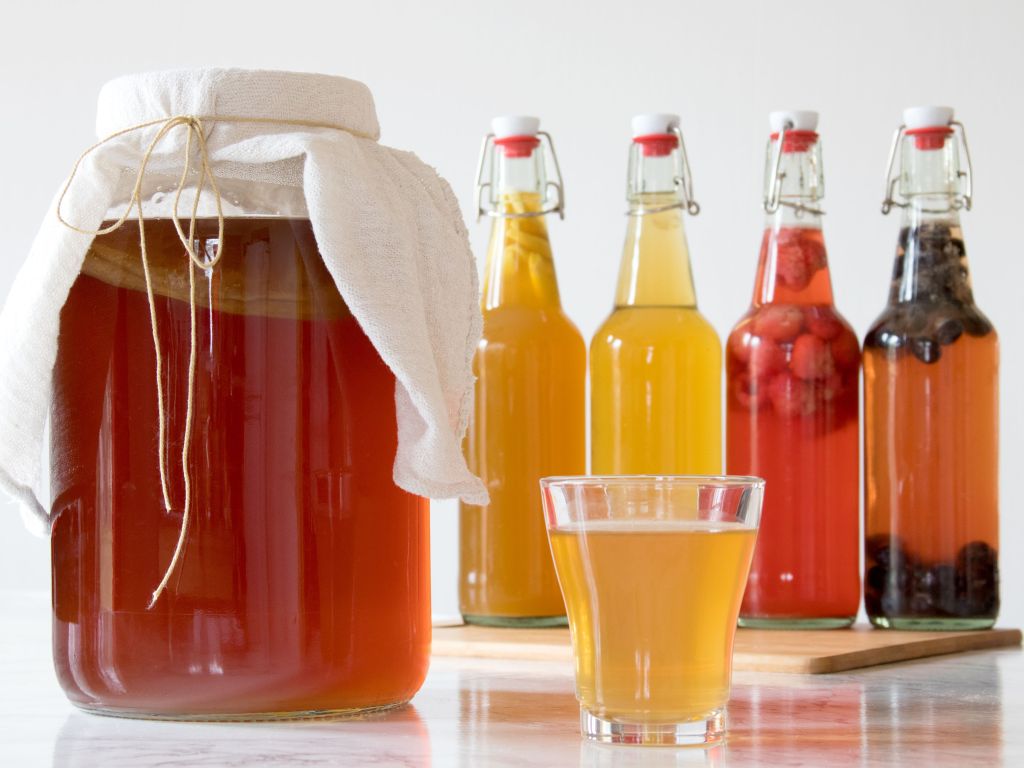
Kombucha is similar to wine, in that it undergoes a fermentation process in order to get the final product. However, the drink undergoes two fermentations depending on if it’s carbonated or not. The first fermentation consists of mixing either black or green tea, yeast, and sugar, followed by covering the ingredients with a cloth. The ingredients are then left to sit for approximately a week or more, as bacteria, acids, and minimal alcohol forms in the drink. If you don’t want your kombucha carbonated, then that first fermentation process is all you need to make homemade kombucha.
If you want your kombucha carbonated, then it would have to go through a second fermentation process which involves sealing the ingredients in an airtight bottle. Sealing it in a bottle traps the CO2 in kombucha, which causes a natural carbonation. In the first fermentation, the ingredients are covered by a cloth, so the CO2 escapes, which is why it won’t be carbonated. Many store brands simply use a machine to artificially carbonate their kombucha.
The bacteria in kombucha serves as a probiotic which is great for gut health. When the yeast breaks down the sugars in the fermentation, small amounts of vitamins and minerals are produced, B vitamins specifically, that helps improve blood flow. When consuming a green tea-based kombucha, the green tea has antioxidants that assist in protecting your cells from harm.
Take proper precaution if you’re going to make kombucha yourself, because if too much bacteria or acids develop in the drink, it can be harmful to your body. It’s safer to just buy commercial kombucha and there are a wide variety of brands and delicious flavors you can find.
Commercial kombucha is generally considered alcohol-free because it must contain less than 0.5% alcohol to be sold in stores. However, the beverage should never be consumed during pregnancy because alcohol is produced during the fermentation stage, even it is minimal. If you’re looking for alcoholic kombucha, there are many stores or bars that sell spiked kombucha which contains more alcohol than the regular kind. No matter what kind it is, give kombucha a try if you haven’t already.
 Honcho Health
Leave a comment